

I usually come here to recap a show I just saw, to post an interview, or to share thoughts on an artist or something happening in the music scene. I open up a little in those pieces, but I have never written something that is one hundred percent about me. I have been thinking about this for a long time, and I think it is time to tell my story.
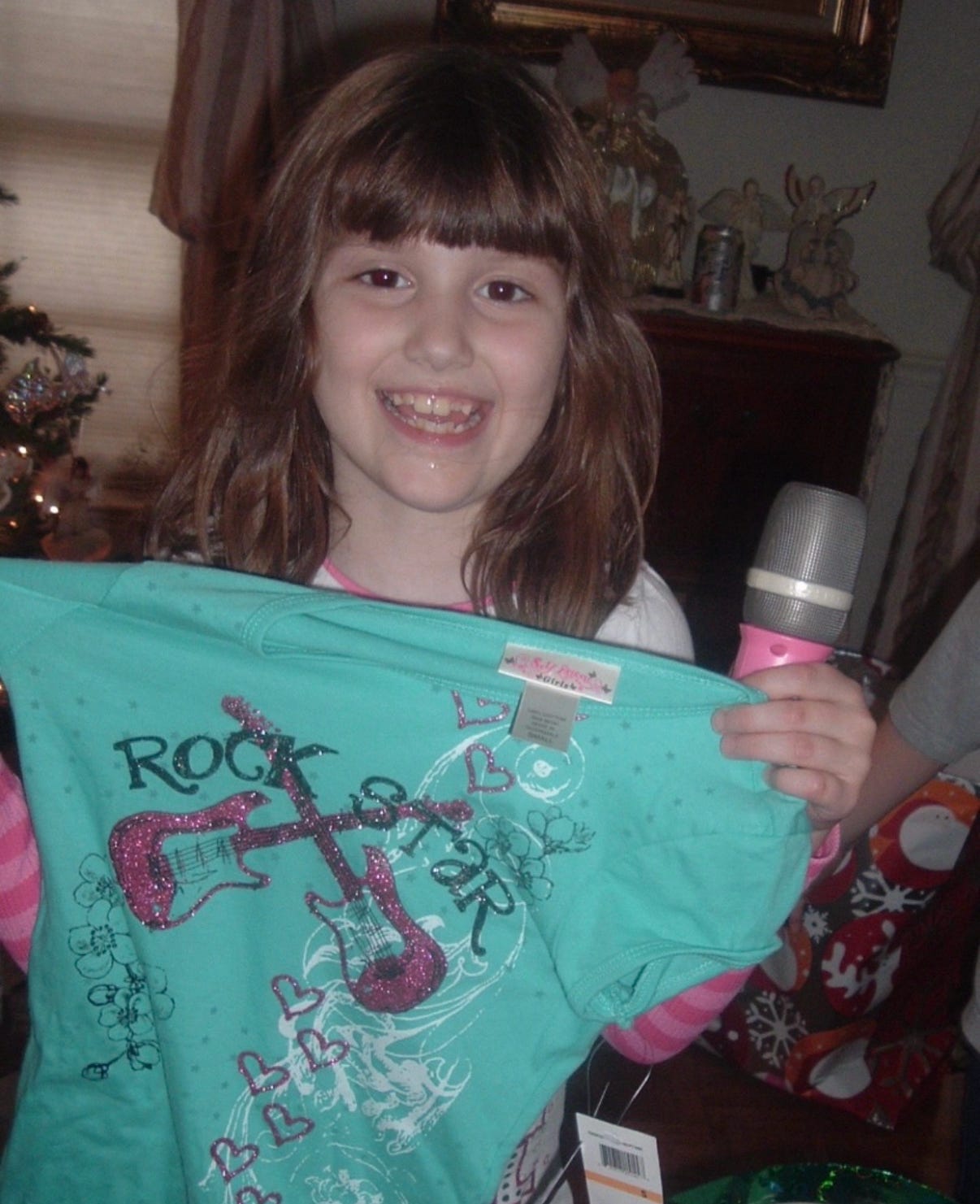
If you have followed me for a while, you might have seen me mention that I am autistic. I wanted to take some time to talk about that more and how it connects to why I do what I do with Undefined. I also want to share how music has helped me as a neurodivergent girl trying to find her place in the world. To tell that story, we have to go back to the early 2000s. I was born in 2000. My early childhood felt normal at first. I was late to walk, but I started talking right after my first birthday and never really stopped. I was that kid who was always chatting, curious, and full of energy. Kindergarten was my favorite place. My class was full of color, play, and one on one learning. I had a little group of friends and loved going every day.
Even then there were signs that my brain worked differently. I had trouble sitting still, never made eye contact, and was always fidgeting. My motor skills were awkward, and I could never seem to stay quiet. Still, I was seen as just a little quirky. That changed when my family moved from North Carolina to Florida. My new school was stricter and colder. I could not focus, and I started to feel different in a way I could not explain.
I began studying the world like an outsider trying to learn the rules. I watched Nickelodeon and Disney Channel and tried to copy the way kids acted, laughed, and spoke. I thought if I could just mirror them, I could belong. But it never worked. Teachers did not understand me, I cried often, and by third grade my parents decided to homeschool me. I spent most of my childhood alone, learning in my own world.
Music was the one thing that made sense. My mom burned mix CDs for me with The Killers, Kelly Clarkson, Coldplay, Muse, and U2. I loved studying each song, asking who sang it and what it meant. Then came The Naked Brothers Band. I was obsessed. I memorized every lyric and line, and when I learned that Nat and Alex Wolff loved The Beatles, I asked to hear them too. The first time I listened to “Love Me Do,” something in me sparked to life. I fell into Beatlemania. I became a walking Beatle encyclopedia who could not pass a trivia card without correcting it. I even got in trouble in first grade because I was reading my Beatles CD liner notes while my teacher was trying to talk to me.
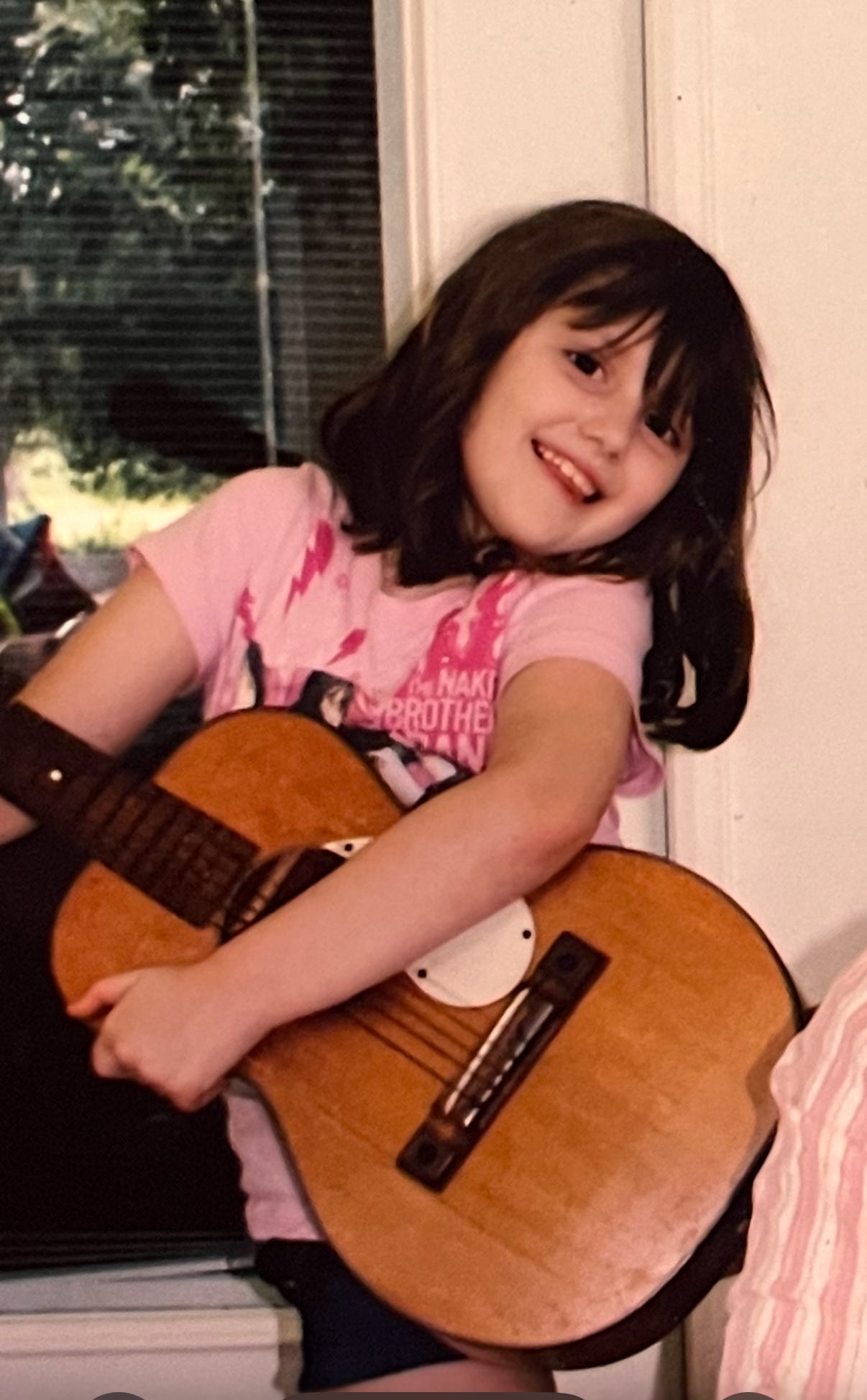
I checked out every book from the library, watched every documentary, and carried DVDs around like treasure. I could not remember spelling words, but I could tell you every Beatles album in order. That was when I realized how my brain worked. When I love something, I do not just like it, I live inside it. Music became my first language. It taught me emotion, empathy, and how to feel things deeply.
As I grew into my teen years, music became a lifeline. In 2014 I was diagnosed with Lyme disease and several autoimmune disorders. During those years of doctor visits, I was also told I might have what was then called Asperger’s Syndrome. It scared me. I refused to talk about it, even though looking back the signs were clear.
Before that, I had another deep obsession. I collected VHS tapes and made YouTube videos showing my collection of old Nickelodeon and Disney movies. Some videos got over one hundred thousand views, and I even made money from it. But at thirteen, I decided it was embarrassing. I shut down the channel, gave away the tapes, and tried to like something more normal. My parents were sad to see me give it up, but I wanted to fit in.
I carried that shame into my teen years. I needed strict routines, wore only T-shirts and jeans, hated loud noises, and was easily overwhelmed. But since I was doing better in school, I convinced myself I had “grown out of it.” Music was the one constant. When I discovered Twenty One Pilots, I heard someone else sing about anxiety and realized I was not alone. Around that time I started listening to Blink 182’s self-titled album every single day. The repetition soothed me. The songs were raw and steady, and I used them to regulate my emotions. Every beat felt like something holding me together.
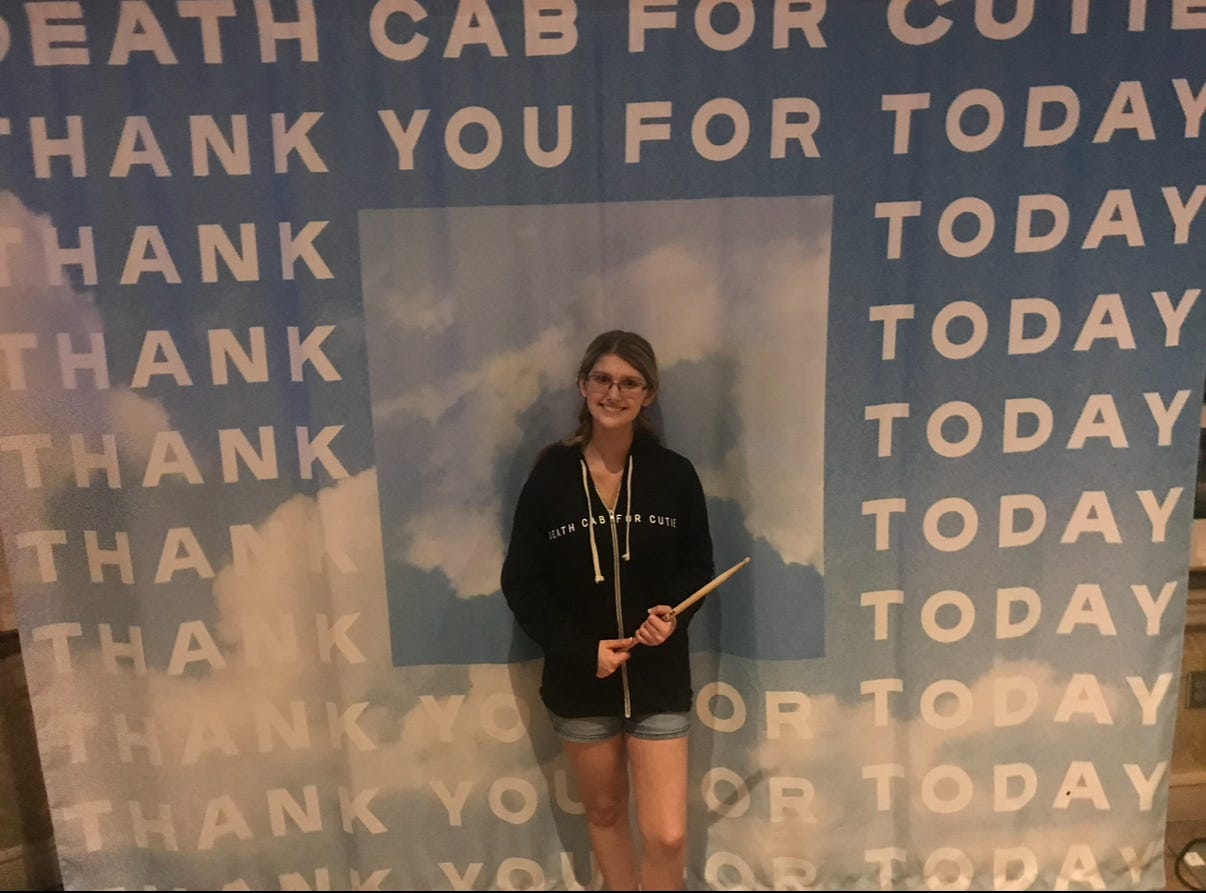
By 2018, I was in technical college studying graphic design and finally felt capable again. I loved creating and found something I was good at. My professor encouraged me to apply to university, and I got into Stetson. In those classes we could listen to music while working, and that is when I discovered Death Cab for Cutie. I had heard their singles before, but when I found out they were coming to town, I decided to go. I used my special interest powers to listen to every song before the show. By the time I stood in the pit talking to superfans, you would have thought I had been one my entire life. That night changed me. Ben Gibbard’s voice felt like a hug to my nervous system. When I was anxious or overstimulated, I would put Death Cab on and it was like the noise inside my brain paused.
College life was still hard. I struggled to make friends. When the pandemic hit, I watched Ben Gibbard’s live streams every day. They were my constant. When we returned to campus, I decided to join a sorority, thinking it would fix everything. I thought I had finally done it. I was in. I had sisters, a house, a community. But it was not what I hoped for. I tried my hardest to fit in, but I felt like I was pretending to be someone else. I realized that the more I tried to be like everyone around me, the more I lost who I was.
Then came the night that changed everything. One random night that was just supposed to get me out of the house turned into what I now call a cannon event. My family was going to see American Aquarium and I figured why not. I had not seen a live show since before COVID and I missed that feeling of air vibrating with sound. I walked in expecting a casual night and walked out changed. BJ Barham came on stage with this raw energy that felt both angry and tender at the same time. His words hit somewhere deep. In a season when I felt uncertain about everything, that show reminded me what joy felt like.
Of course I became obsessed. Between 2021 and 2022 I saw them about eight times. I celebrated my twenty first birthday at their show in Jacksonville and Neil Jones, their pedal steel player, handed me my first beer.
That night sent me into what I did not realize then was another autistic deep dive. I learned every lyric, every lineup change, every bit of band lore. I found out they had an album called Burn Flicker Die that had been recorded in Muscle Shoals, Alabama, produced by this random guy named Jason Isbell… And like any good deep dive, one name led to another. If a band I love mentions another artist, I have to listen. It is a compulsion and a gift all at once. So I queued up Jason Isbell.
If you have read even one of my posts, you already know how that went. Jason’s music hit me like lightning and balm at the same time. Until then, I liked songs because they sounded good. I rarely understood what lyrics meant because my brain processes words literally. I could memorize every line of a song without ever grasping what it was saying. American Aquarium had started to change that by giving me stories I could picture, but Jason was the first artist whose words truly clicked. His voice felt like a hug to my nervous system. The lyrics landed in pictures. I had just moved to Mississippi, and when I heard him sing about a speed trap town I could see my own highway. He even had a song called Tupelo and I lived near Tupelo, which felt almost too perfect. The song that stayed with me most was Last of My Kind. The line “I tried to go to college but I did not belong. Everything I said was either funny or wrong” felt like someone had opened my diary. I was that girl trying to be loved in a sorority, forcing myself into a puzzle where my piece did not fit. During that lonely time Jason’s music carried me and whenever I listened to it, I felt safe.
By senior year I had finally withdrawn from the sorority. I got a tiny campus apartment and decided to figure out who I really was. With all the time I used to spend on meetings and events, I brought back my college radio show. I called it Undefined because I wanted the freedom to play anything. Some days it was The National, other days Barenaked Ladies, sometimes Tyler Childers. I liked that it could be messy and real.
When I was a kid I would spend hours watching musician interviews and late night performances, imagining the questions I would ask if it were me. Now I had the chance to do it. I started reaching out to artists and asking if they wanted to talk. To my surprise, people said yes. My first semester I interviewed Cory Branan, Shane Smith, and John Flansburgh from They Might Be Giants. Like most twenty two year olds in 2023, I discovered TMBG and promptly lost my mind over them. I was almost mad at my parents for not introducing me sooner. They were weird, funny, and completely themselves. Watching them helped me realize I could be the same way.
Around that same time I finally stopped pretending I had “grown out” of autism. The mask was slipping anyway. I took the RAADS R test and scored over 170, which is very high. In 2024 I was officially diagnosed again with high functioning autism and sensory processing disorder. Instead of feeling ashamed, I felt relief. I started seeing the pattern in everything. It was okay that I loved being alone, that I took myself on dates, that I needed learning accommodations, that I slept with plushies, that my favorite cartoon was Bluey. The things that made me feel different were also the things that made me thrive.
My ability to memorize details became a superpower for interviews and research. My focus made artists feel seen. Slowly, I stopped caring if my interests did not match other girls my age. I realized that joy matters more than fitting in. Through sharing my love for music online, I found people who understood me. I never made honor roll, but now I am earning a PhD studying how media and music affect people.
Right before graduation, I went to see Wilco. It was my first time going to a concert alone. I was nervous, so I asked for ADA seating and they placed me in an open section with a folding chair. Having that space gave me freedom. When the lights dimmed and the first notes started, I stood up and let my body move. I swayed, I jumped, I danced in my own rhythm. I stopped thinking about how I looked. For the first time, I felt completely in my body, fully present, fully me.
After the show, strangers came up to tell me they loved watching me dance. They said it made them smile. That meant more to me than they will ever know. I had spent so many years hiding, and now I was being seen in joy.
Now, I do not hide anymore. At ShoalsFest this year, all my friends knew about my autism. When Jason walked on stage, I could feel the electricity in my chest. It was my first show in the barricade. I did not hold back. When he started playing “King of Oklahoma,” I lost it completely in the best way possible. I jumped, I laughed, I did ridiculous dance moves that would have embarrassed the old me. I felt pure happiness.
I think about that moment often. Little Bella would have tried to stay still, to not be noticed. But now I dance without apology. I used to think autism made me different in a way that I had to hide. Now I see it as the reason I feel everything so deeply, the reason I love the way I do, the reason music feels like sunlight in my chest.
If you are neurodivergent, I hope you know this. You are not alone. There are people like me who know how it feels to be different, to be misunderstood, to cry over the things your brain will not let you do easily. But you are not broken. Find what makes you come alive and hold onto it. Let yourself love what you love. Go deep. Go to shows. Dance the way your body wants to. If you need space, ask for it. If you need quiet, take it. Never feel ashamed to take up space.
When I stopped hiding and stopped trying to be less of myself, the world became louder, brighter, and more full of music. I am still learning, but I am proud of who I am. I am proud of my autistic brain, my deep dives, and my heart that feels everything. If you ever see me at a show, jumping and swaying with my eyes closed, know that I am home.
Dear Bella,
I laughed and I cried when I read this! What a beautiful journey because YOU made it so! You are inspiring and brave and I connected to so much of this!! Often people say I’m obsessed with music and live shows but it’s my joy and lifeline. You are a beautiful writer and I’m sad for the times you struggled but know they brought you to now! On my dad’s gravestone it says - you gotta dance! We look back at his brilliant lawyer father husband grandfather life and think he might have had some ASD. He would dance anywhere anytime and taught us to do the same. An analogy for life! I can’t wait to meet you at a show dear human!!!:) xxxooo
You are so inspiring, Bella! Your confidence and love of music and the folks who make it put you in a very special and unique category, and one I can definitely relate to. Figuring out who you are at such a young age and then OWNING IT is something that so many folks take YEARS striving for (and even then, never fully achieve). I share your love for JI400U, and always look forward to your posts, interviews and opinions. Keep doing YOU!! ❤️🎶