

“Because we need each other
We believe in one another
And I know we're going to uncover
What's sleepin' in our soul”
— Oasis, Acquiesce
It was supposed to be just another summer festival in 2009. But minutes before Oasis was set to perform at Rock en Seine in Paris, the unthinkable happened. A backstage fight between Liam and Noel Gallagher brought everything to a halt. The show was canceled. The tour was scrapped. Just like that, Oasis was over.
In the years that followed, both brothers launched separate projects with success. Liam Gallagher even sold out Knebworth in 2022, 26 years after Oasis’s historic performance there in 1996. Still, fans never stopped dreaming about a reunion. The idea of the Gallaghers making peace and bringing Oasis back felt like a fantasy, especially as both brothers were consistently vocal on TV, radio, and social media about their disdain for one another. But maybe time really can heal.
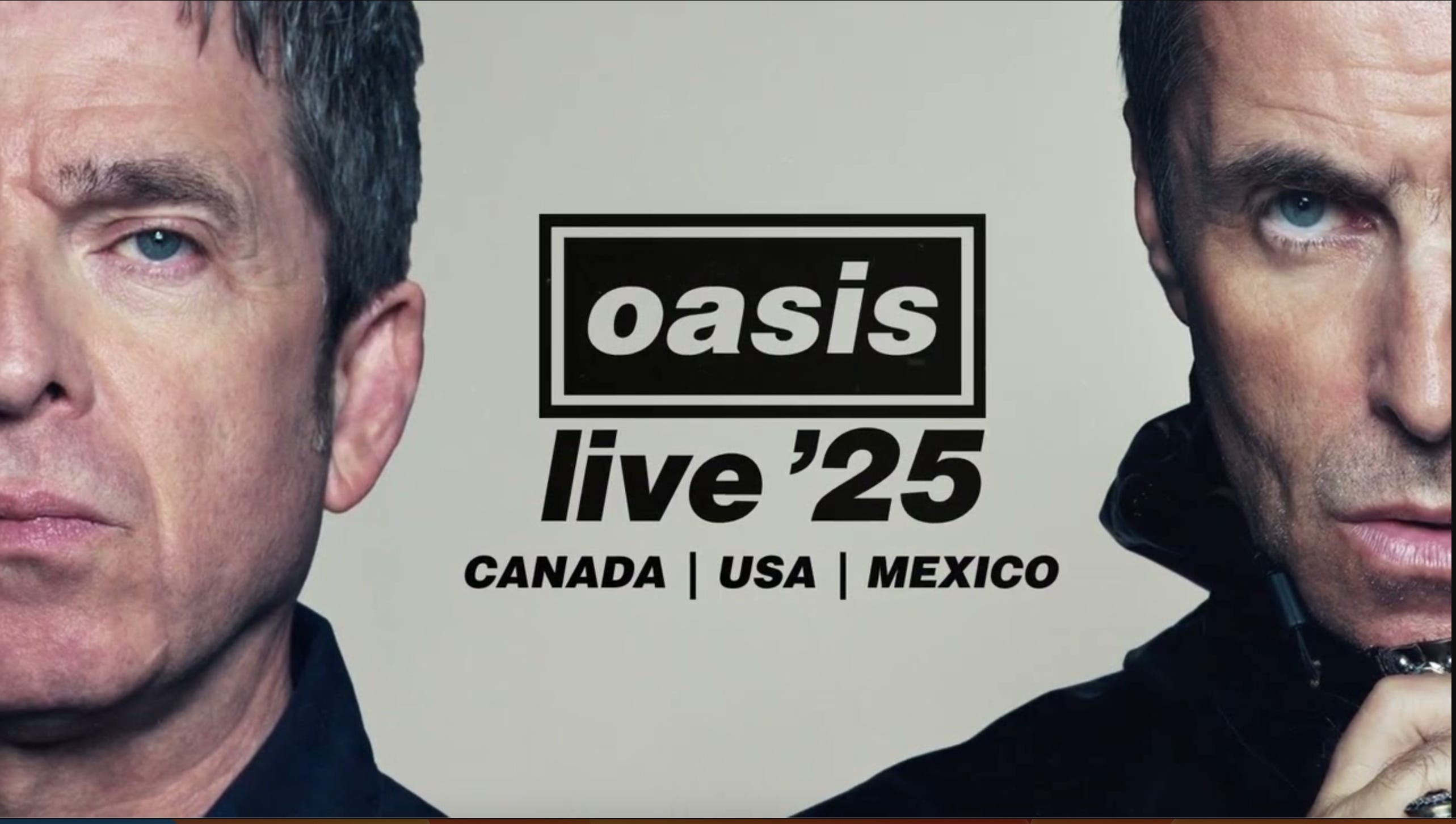
In 2024, the dream became reality. The band announced their return with a world tour set for 2025. A total of 1.4 million tickets were released, and according to the BBC, around 10 million fans from 158 countries joined the Ticketmaster queue. Now, Oasis is officially back, and the buzz surrounding their return proves something deeper than nostalgia. It shows how much people still crave community. There is something deeply moving about a full stadium singing Don't Look Back in Anger in unison. The culture has changed dramatically since What’s the Story Morning Glory was released. In many ways, this reunion arrives in a world shaped by the death of monoculture.
Vox defines modern monoculture as the range of artifacts, characters, voices, and stories that a specific demographic finds recognizable and relatable. Wonderwall is a perfect example. It has become something of a punchline, the go-to song for anyone with an acoustic guitar. But if you are in a group and someone starts singing “Today is gonna be the day,” chances are most people will know exactly what comes next. Even if someone doesn’t recognize the name Oasis, they know the riff.
Back in 1995, when the single was released, we consumed media in a more collective way. Radios played the same songs. Stores sold similar CDs. Everyone knew what was on TV, from Friends to Seinfeld. Celebrities like Mariah Carey, Tom Hanks, and Jim Carrey were everywhere. People still had their own preferences, but there was a common thread that connected us.
Today, that cultural thread is harder to find. The rise of streaming and social media has splintered our media habits into highly personalized bubbles. Ask a group of people what they are watching or listening to, and you will probably get completely different answers. Even within the same household, it is rare for everyone to be tuned into the same show or artist. My parents know every pop hit from the early 2000s because we all heard the same radio stations and watched the same music channels. Now, they have never even heard of songs like Espresso or Not Like Us.
That kind of disconnect is common now. The shared soundtracks that once defined a summer or a school year have given way to curated playlists and TikTok trends that disappear in a week. It is harder than ever to feel like everyone is experiencing the same thing at the same time.
The Oasis reunion brings that shared experience back. The tour kicked off on July 4, 2025, in Cardiff at Principality Stadium. The brothers walked on stage to the instrumental track F***** in the Bushes as the crowd erupted in cheers. In fan footage, it is almost impossible to hear Liam’s vocals over the sound of the audience singing along so loudly and proudly. Grown men cried. Children sat on their parents’ shoulders. Friends embraced each other, overwhelmed. A packed stadium took in a moment that had once felt impossible.
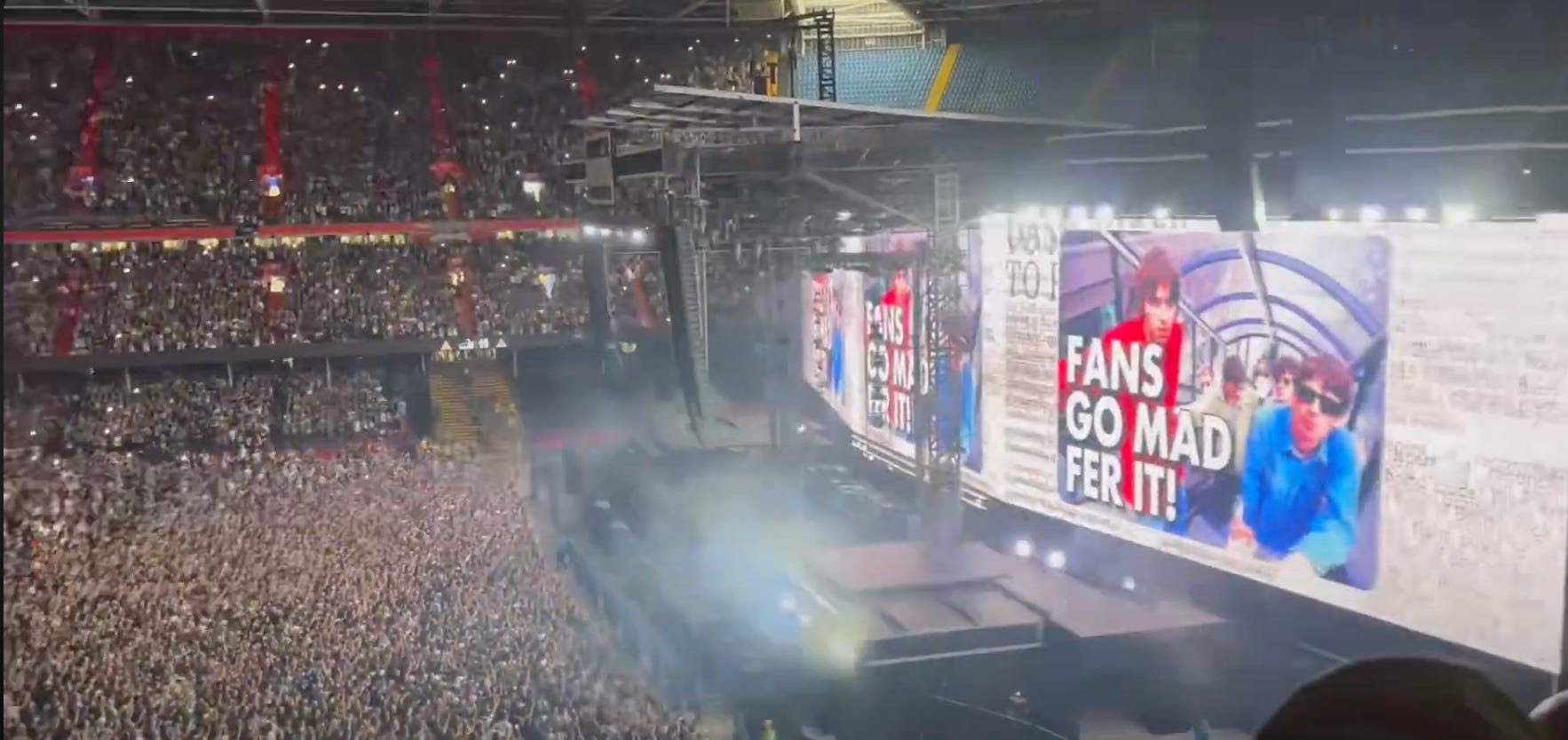
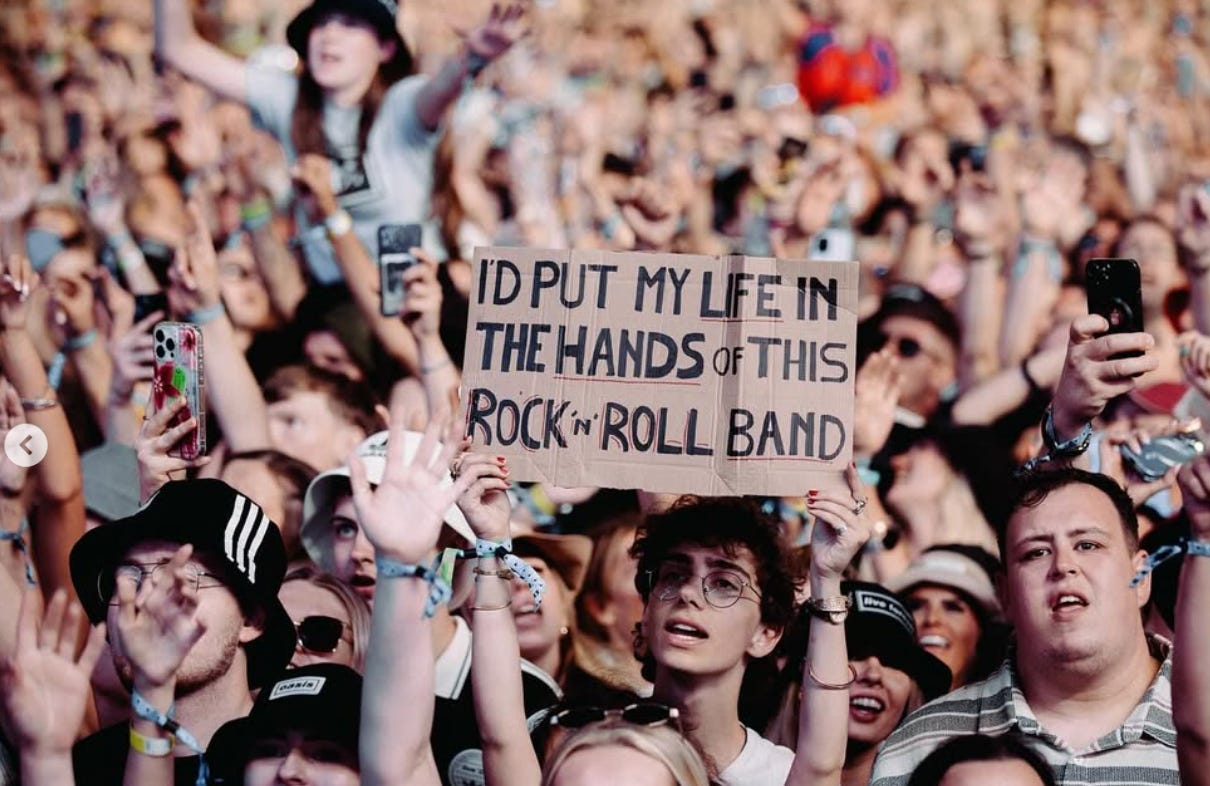
One Guardian article covering the show quoted a fan who said, “So many memories of happy, better times. Lots of us cried. They’re a working-class band and they attract that audience. No band has touched a generation like that.” Another fan, interviewed after the London show, had traveled from Norway and called it the best gig he had ever been to. His joy was infectious, captured in a Facebook video where he and others radiate gratitude and awe.
The emotion of these shows stands in sharp contrast to the spectacle of many modern stadium tours. Taylor Swift’s Eras Tour, Beyoncé’s Cowboy Carter, and Katy Perry’s Lifetimes Tour rely on constant set changes, choreography, elaborate graphics, and highly produced moments built for viral attention. These concerts are visual feasts, and they reflect the pace and pressure of the digital age. Oasis offers something completely different. No lasers. No complex choreography. Just the music. There are a few jumbo screens and some fireworks at the end, but people are not buying tickets for the visuals. They are coming to hear songs that shaped their lives.
And it is the songs that make this reunion work. Noel Gallagher’s songwriting has always felt both personal and universal. Many bands from that era tried too hard to chase trends. Their music has not aged well. Oasis aimed to channel the spirit of bands like The Beatles and The Stone Roses into something timeless. That choice has paid off.
The Masterplan is one of Noel’s most beloved songs. Originally released as a B-side to Wonderwall, it was later included on a 1998 compilation and has become a live staple. The lyrics speak to uncertainty, belonging, and surrendering to the unknown:
“Dance if you wanna dance
Please, brother, take a chance
You know they're gonna go
Which way they wanna go
All we know is that we don't know
How it's gonna be
Please, brother, let it be
Life on the other hand
Won't make us understand
We're all part of a master plan”
That chorus still resonates. This reunion is not just a gift for longtime fans. It is also an introduction for a new generation. Many of the young people attending these shows were not even born when Oasis first rose to fame, but the songs speak to them. Tracks like Some Might Say, Little by Little, and Don’t Look Back in Anger continue to spread across platforms and playlists, standing the test of time.
I grew up knowing Wonderwall and Don’t Look Back in Anger. I always loved Supersonic and Live Forever, but I didn’t dive deeper until recently. Now, it is all I listen to. Their music has become one of my autism special interests. It moves me deeply, and I am kicking myself for not discovering more of it sooner. But I am also grateful that I get to experience it now, during this rare moment in music history.
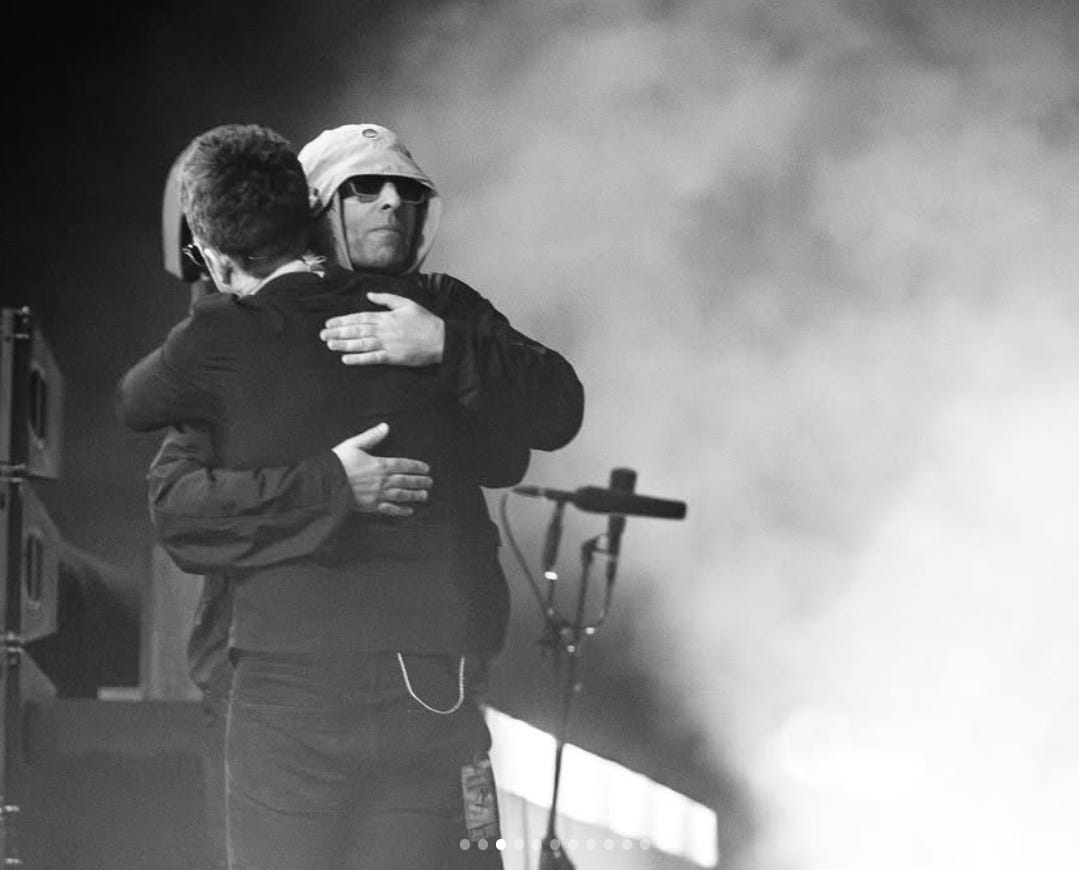
Because maybe the most important part of this reunion is not just the music or the nostalgia. It is the fact that two brothers are back on stage, side by side. The Gallagher family is healing. And in some way, so are we.
In an era that often feels divided, distracted, and deeply isolated, this reunion reminds us what it means to belong. To believe in something together. To sing with strangers at the top of your lungs and feel, just for a moment, like everything makes sense.
This is not just a concert. It is a cultural reset. A celebration of something rare and meaningful.
And this is a moment in music history that truly might live forever.
Thank you for writing this. Spot on. 💯👊🏼🇬🇧