

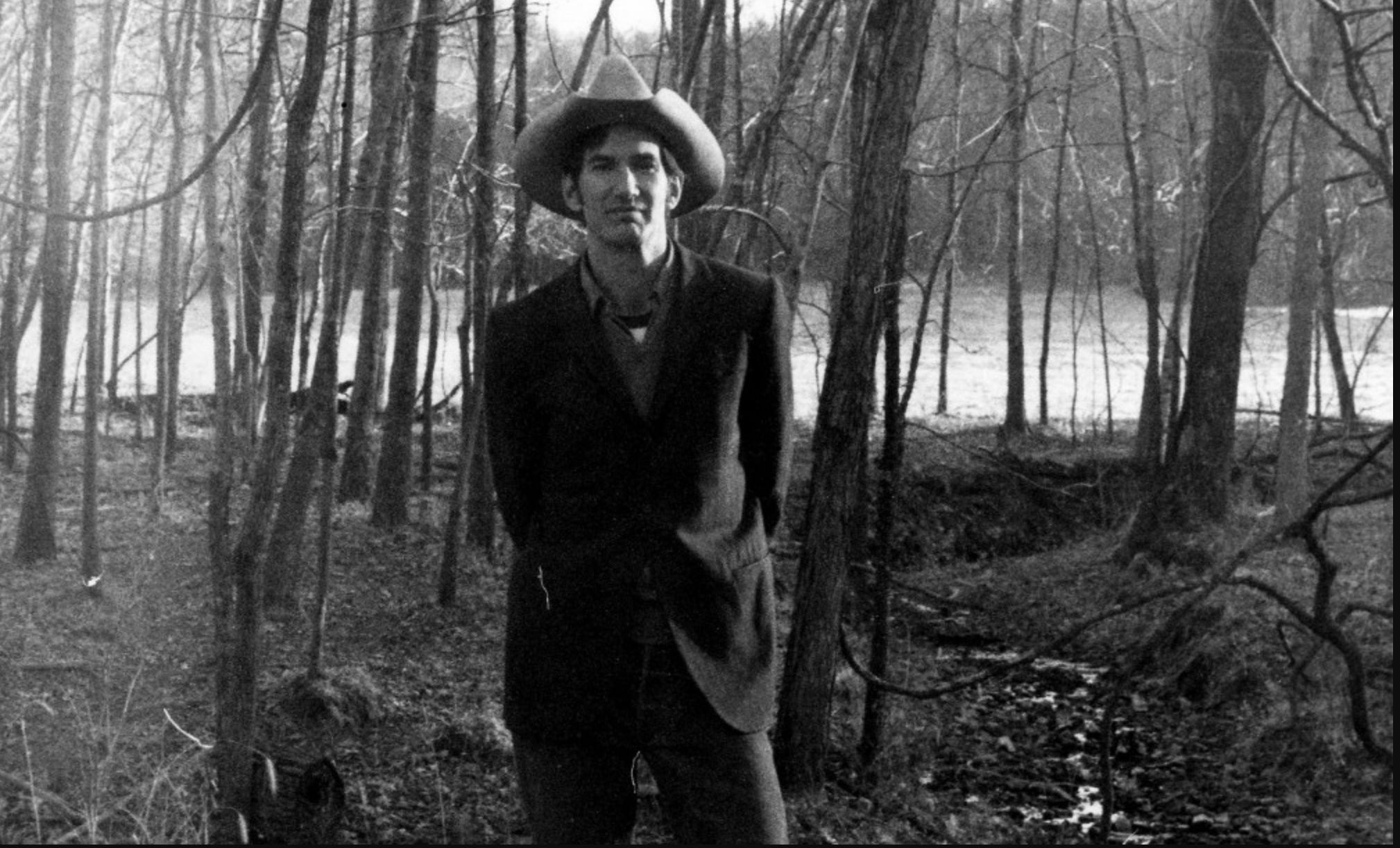
To live is to fly
Low and high
So shake the dust off of your wings
And the sleep out of your eyes.”
—Townes Van Zandt, “To Live Is to Fly”
Do you ever discover something and realize you've stumbled upon sacred art? Like you unearthed something hidden and holy, like when Nic Cage finds the National Treasure. That’s how I felt when I finally sat down and really listened to the music of Townes Van Zandt. It felt spiritual. It felt foundational. It felt like I had found the source—the well that so many of my favorite artists have drawn from.
For context, I’d heard the name before, mainly in interviews with artists I admire. Townes kept popping up in conversations, liner notes, and inspirations. One memory in particular stands out: when I saw Lucero live, Ben Nichols told the story of how “Hey Darlin’, Do You Gamble?” was inspired by a question Townes asked his third wife. I thought it was a sweet anecdote but didn’t dig further at the time.
Looking back, Townes was already orbiting my musical universe. Jason Isbell’s cover of “Pancho and Lefty” had long been a source of comfort for me. That song, especially Isbell’s version, has carried me through some of my hardest days. It’s the kind of song that makes everything feel still and safe, even if just for four minutes. I knew it was a cover, I knew it was originally by Townes, but for some reason, I never sought out the original—until recently.
After seeing Isbell live in Nashville and hearing him play “Pancho and Lefty,” something shifted. That song stayed with me like a whisper in the back of my brain. When I got home from that trip, I finally searched for the original. I found a clip from the documentary Heartworn Highways where Townes plays it solo on his guitar, and I got chills. I immediately craved more, so I hit play on the Townes Van Zandt Essentials playlist on Apple Music.
I listened straight through in one sitting. No skips. Just me, fully immersed in the music while doing other things—but more and more, I found myself stopping what I was doing just to listen. And when the playlist ended, I didn’t want to go back to anything else. I craved more Townes.
His music made me want to be still. I had this overwhelming urge to drive to the lake, put on my headphones, and just walk—to be with nature and really absorb every word and strum. I didn’t want distractions. I just wanted to sit in his world for a little while.
Besides “Pancho,” several other songs immediately stood out. “I’ll Be Here in the Morning” felt like a lullaby—a quiet promise of devotion. It’s a gentle song about staying present for someone you love even through chaos or distance. Lyrics like:
“No prettier sight than looking back
On a town you left behind
There is nothin' that's as real
As a love that's in my mind”
…it just hit me. It felt like a man, worn and weathered by the road, trying to give comfort to someone he might have once had to leave behind, but now, he’s here, and he’s staying. It warmed my heart. It was so soothing. So rare. So honest.
Other songs that hit me hard were “High, Low and In Between,” “Fare Thee Well, Miss Carousel,” and “Tecumseh Valley.” I had heard Isbell’s cover of “Tecumseh Valley” too, but never gave it full attention. Listening to Townes’s original was something else entirely. It’s a gut-wrenching ballad about a young woman named Caroline, a miner’s daughter who moves to Tecumseh Valley and, through a series of hardships, is forced into sex work and ultimately dies by suicide.
On the surface, the song sounds like a peaceful folk tune. But once you catch the lyrics, it hits like a freight train. Townes doesn’t sensationalize her pain. He just lays it bare in poetry. It starts with:
“The name she gave was Caroline
The daughter of a miner
And her ways were free and it seemed to me
That sunshine walked beside her”
There’s hope in that first verse—an image of a bright young girl chasing a new life. But it quickly darkens:
“But the times were hard, Lord, and the jobs were few
All through Tecumseh Valley”
“She saved enough to get back home
When spring replaced the winter
But her dreams were denied, her pa had died”
The sunshine fades. And by the end, we get:
“They found her down beneath the stairs
That led to Gypsy Sally's
And in her hand when she died was a note that cried
‘Fare thee well, Tecumseh Valley’”
The repetition of the opening verse now carries unbearable weight. That’s the magic of Townes, he writes stories that unfold like short films, told in verse. You don’t just hear them; you feel them. You carry them.
After hours of listening, I needed to know more about the man behind the songs. I’m autistic, and when I latch onto a new interest, I go full deep-dive mode. I don’t just listen casually—I want context, history, background, meaning. I want to understand.
That’s how I found Be Here to Love Me, the 2004 documentary about Townes’s life. It was free on YouTube, and I LOVE a good music documentary, so I didn’t hesitate—no trailer, no context, just play. What followed was one of the most emotional viewing experiences I’ve ever had.
Be Here to Love Me is a beautifully heartbreaking film. It shows Townes as he really was: brilliant, tragic, kind, absent, gentle, destructive. His life was full of melancholy—shock therapy that permanently damaged his memory, mental illness, addiction, failed relationships, lost potential. But what destroyed me most were the scenes with his children, especially his younger kids, William and Katie Belle.
There’s a moment where William says he can’t fall asleep without listening to his dad’s music. He says he feels for Katie because she barely has any memories of their father. Then Katie speaks, sharing that she dreams about him. One dream was of him playing with their dog. That’s what broke me—the simplicity of it. A daughter holding onto a dream for connection.
It broke my heart that Townes had struggled so much, especially at a time when the world was not built to support men’s mental health. Therapy wasn’t normalized. Rehab wasn’t the same. And people like Townes were often just left to cope in silence. That silence affected not only him, but everyone who loved him.
But I also found myself wondering: if he hadn’t struggled the way he did, would we even have these songs? That contradiction haunted me. Some of the most tortured people create the most profound art. It’s tragic, but it’s real.
That night, the documentary followed me into my dreams. I dreamt about the scene where his eldest son, J.T., recalls how Townes couldn’t handle grocery stores. They were too big, too overwhelming. So he did his shopping at a 7-Eleven-type place instead. I don’t know why that particular scene stuck in my brain, but it did. It said so much about his sensitivity—how the world was just too loud sometimes. It made me think about how hard everyday life must have been for him.
The next morning, I still couldn’t shake the film. I kept thinking about how Townes, unlike his peers Dylan or Kristofferson, remained more of a cult figure. He was admired by songwriters and die-hard fans, but rarely reached mainstream fame. Some of his most famous songs only reached the masses because others covered them—Willie and Merle with “Pancho and Lefty,” Emmylou Harris with “If I Needed You.” And yet, through those covers, Townes became part of the musical zeitgeist. That realization gave me chills.
The deeper I dug into his discography, the more full-circle it all felt. So many of my heroes—Jason Isbell, Shane Smith and the Saints, Charley Crockett, Lucero, Lyle Lovett—they all trace their roots back to Townes. Without him, their music wouldn’t exist as it does. That connection felt sacred.
At the same time, a deep sadness came with this discovery. It breaks my heart that I’ll never get to see him live, never experience his music in person. I’m used to discovering an artist, becoming obsessed, and putting them on my “must see live” list. But with Townes, that’s not possible. He’s gone. And that hurts.
But I’m also grateful—grateful that I found him at all. That these songs found me when I needed them.
Because of my autism, I often struggle with lyrics. I have processing issues that make it hard to follow what a song is saying unless it’s incredibly clear. That’s part of why I love Jason Isbell—his storytelling is so vivid, it feels like watching a movie in your head. Townes does the same. His songs play out like little films. His lyrics are rich with imagery and feeling, and I can follow every frame.
Even though I’m at the very beginning of my Townes journey, I’ve already formed deep attachments to songs like “Flying Shoes,” “If I Needed You,” and of course, “To Live Is to Fly.” It’s rare to feel this kind of connection with music that predates not only my childhood, but my parents’ childhood. It’s a testament to the timelessness of good writing. To the enduring power of storytelling.
I can’t wait to go deeper, to read more, to sit with these songs and let them grow roots. I’m so grateful I found Townes Van Zandt, even if it’s decades after he left us. Some songs don’t fade. Some voices just keep flying.
RIP TVZ. You might be gone, but your voice still echoes through everything that matters.
Bella, thank you so much for sharing!! Townes has been a mainstay for me for a while. You’ve done a great job approximating the power of his lyrics and presence he holds, even to this day. If you haven’t already, be sure to check out the book “I’ll Be Here in the Morning: The Songwriting Legacy of Townes Van Zandt”, where many modern day songwriters and even some Townes contemporaries speak about his influence. That’s what attracts me to Jason Isbell as well: they are both masterful storytellers.